Can you coat cracked concrete?
Often, but the answer depends on what caused the crack and whether the slab is still moving. A coating can improve the finish, but it cannot stop structural movement underneath.
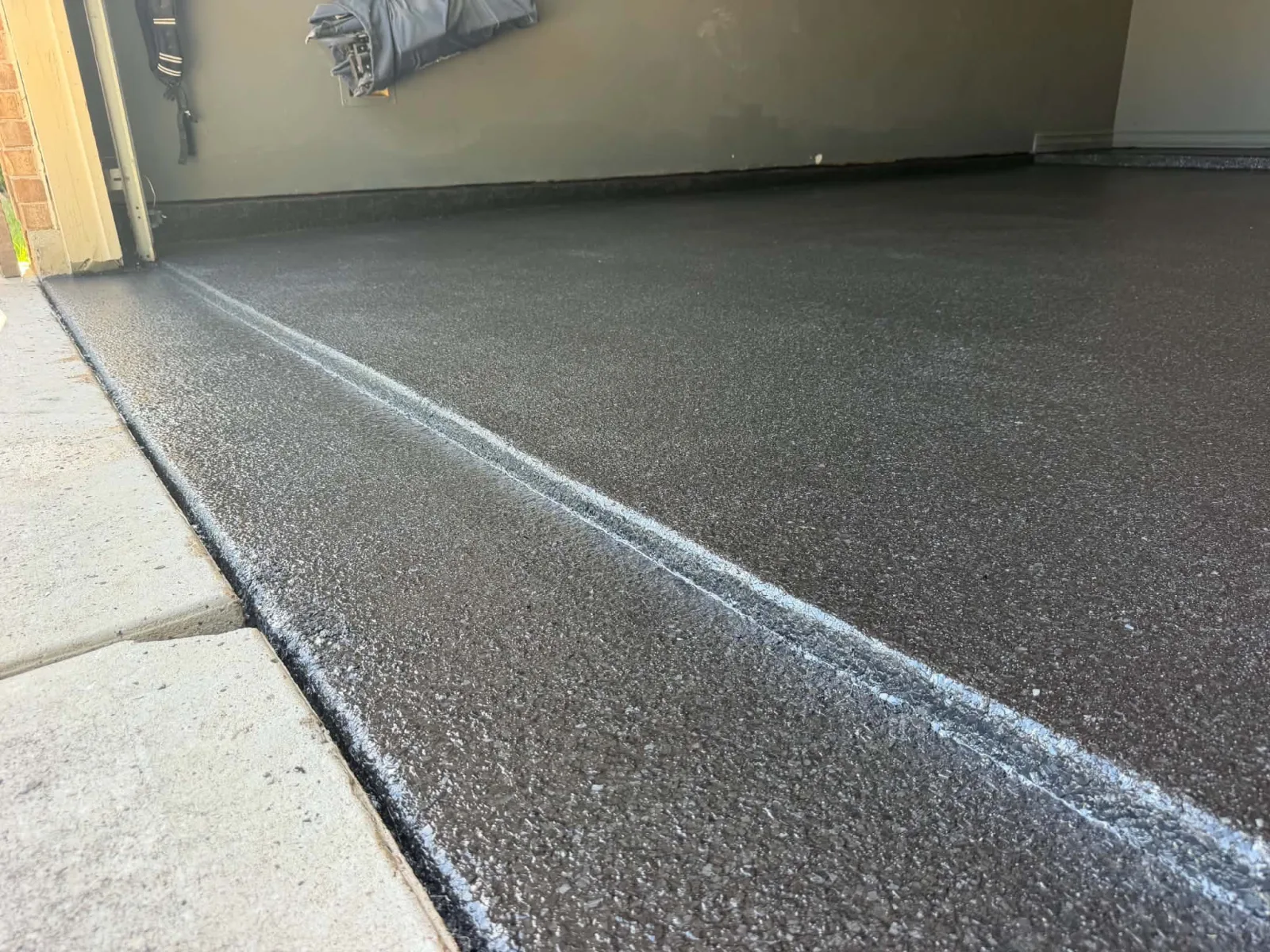
Cracks are common in garage slabs. Some are fine, stable lines from shrinkage. Others are control joints designed to move. Some indicate settlement, moisture, or a slab condition that needs more attention. Treating every line the same is how homeowners end up with a coating that looks good for a short time and then reflects movement.
Start by identifying the line
A site review should separate at least four conditions:
- Static hairline cracks: narrow cracks that appear stable and may be repairable before coating.
- Control or sawcut joints: planned joints that help the slab manage shrinkage.
- Expansion or isolation joints: movement locations that should remain functional.
- Spalling, settlement, or active movement: conditions that may require a different repair plan before a coating is considered.
Photos can help with the first conversation, but they do not replace looking at the slab in person. The width, edges, height change, moisture, and history of the crack matter.
What repair can and cannot do
Small cracks, holes, and damaged areas that will not cover cleanly can often be filled or skim-coated with a compatible material. Simiron’s current system guidance describes repair steps for cracks, holes, eroded areas, and spalled concrete. The repair must be flush, sound, and compatible with the coating system.
A repair is not a guarantee that a moving slab will stay hidden. If the concrete continues to shrink, settle, or move, the line can telegraph through the new finish. A good proposal explains that limitation instead of promising that every crack will disappear.
Control joints are not ordinary cracks
Control joints are part of the slab design. Depending on the system and the joint condition, they may be filled and coated, detailed with a joint filler, or left visible. Simiron’s Simcrete SL guide states that contraction joints may be filled and coated over, while also warning that the coating may crack if the slab experiences excessive shrinkage or movement. Isolation, expansion, and movable joints need the appropriate joint material and should not simply be sealed over.
Moisture is another reason coatings fail
Cracks can provide a path for water, but a dry-looking floor does not prove that moisture is not moving through the slab. The selected system has its own moisture limits and testing requirements. If the condition is outside those limits, a compatible moisture-control primer or a different installation plan may be needed.
Questions to ask before approving the work
- Which lines are cracks, and which are control or expansion joints?
- What repair material will be used, and is it included in the estimate?
- What happens if the slab moves after coating?
- How will moisture be evaluated?
- Will the joint remain functional, and how will the finished edge look?
The honest answer: a coating can be installed over some cracked concrete after the slab is evaluated and prepared. It should not be sold as a structural repair or as a promise that a moving crack can never show again.
The bottom line
Cracked concrete does not automatically rule out a garage floor coating. It does mean the estimate should include a closer inspection, a repair plan, and clear expectations about movement. That conversation is part of a professional installation.
This article is general education and is not a structural diagnosis. Ask a qualified professional to evaluate significant settlement, wide cracks, or active movement.
Have a cracked garage slab?
Send Carnar Epoxy a few photos and we can discuss the right next step for an on-site estimate.
Request a free estimate