What affects the cost of a garage floor coating in Houston?
Square footage matters, but it is only one part of a useful estimate. The condition of the concrete, preparation work, repairs, coating system, and finish details can change the scope before installation begins.
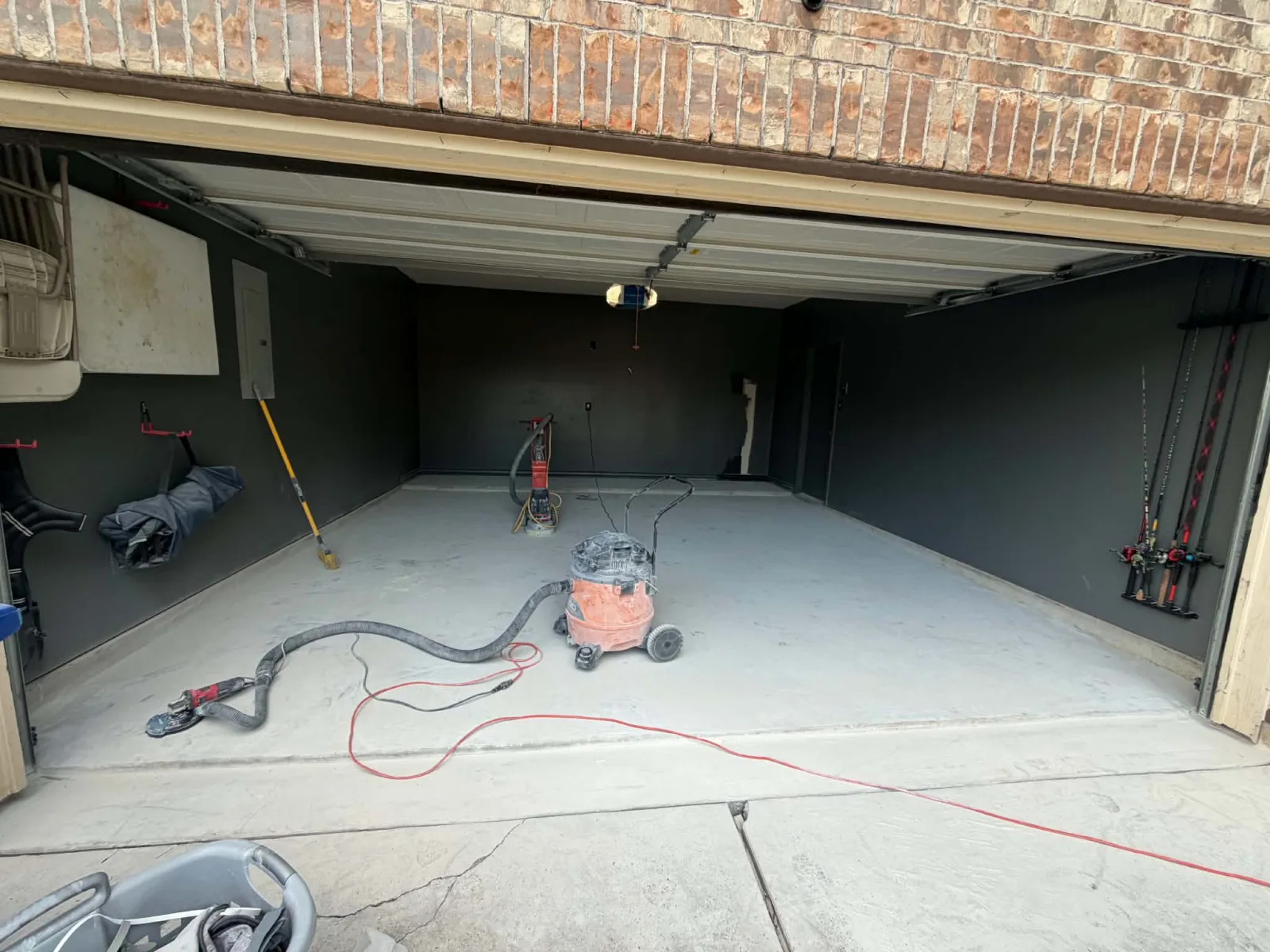
Homeowners often ask for a price per square foot before anyone has seen the garage. That number can be helpful for an early budget, but it cannot explain the full job by itself. Two garages with the same floor area may require different preparation, repairs, materials, or edge work.
The practical answer: a reliable estimate should identify the slab condition, preparation method, repairs, coating layers, finish, and return-to-service schedule. A total price without a written scope is difficult to compare.
1. Floor size and layout
A larger floor usually requires more preparation time and material. Layout matters too. A clear rectangular garage is different from a space with steps, utility pads, storage areas, narrow sections, or multiple rooms. Those features add edges and detail work even when the total square footage is similar.
Measurements should also clarify what is included. Ask whether the estimate covers only the main slab or also stem walls, curbs, steps, closets, and the garage entrance.
2. Concrete condition and surface preparation
Surface preparation is one of the most important parts of a coating project. Simiron’s current Simflake SB system guide requires concrete to be sound, clean, dry, and free of contaminants. It calls for diamond grinding or shotblasting bare concrete to a CSP 3 or greater profile, along with repairs to cracks, holes, and spalled areas.
A relatively clean slab may have a simpler preparation scope than concrete with old paint, adhesive, oil, curing compounds, sealer, or weak surface paste. Mechanical preparation also reveals conditions that were not visible before work started.
This is why the preparation method should be written into the estimate. A low price that leaves preparation unclear may not represent the same job as an estimate that includes mechanical profiling and dust control.
3. Cracks, joints, and damaged areas
Small repairs and extensive repairs are not the same scope. Cracks, spalling, pitting, low areas, and damaged edges require different materials and time. Control joints and moving joints also need to be identified because they are not automatically treated like a cosmetic crack.
No coating can guarantee that concrete will never move again. The estimate should explain what will be repaired, what will remain visible, and how joints will be handled.
4. Moisture and other slab conditions
Concrete can transmit moisture even when the surface looks dry. The selected coating may have specific moisture limits or may require additional evaluation or a compatible primer. That can change the system and the project schedule.
Moisture is one reason a site visit is more useful than choosing a package from a photograph. It is also why a contractor should follow the current technical data for the products being installed.
5. The coating system and number of layers
“Epoxy floor” can describe several different scopes. A system may include a primer, pigmented base layer, decorative flake broadcast, grout or intermediate layer, and protective topcoat. Metallic epoxy and other decorative systems have different application steps from a standard flake floor.
Material type matters, but the complete assembly matters more than a single product name. Ask for the layers in order and the purpose of each layer.
6. Flake coverage and finish selection
A light decorative chip application uses a different amount of material and labor than a full broadcast that covers the base coat. Color blends, metallic effects, custom layouts, logos, and separate zones can also change the work.
Texture and slip resistance should be discussed at the same time as appearance. More texture may improve traction, but it can also change how the floor feels and how easily it is cleaned.
7. Edges, steps, and the garage entrance
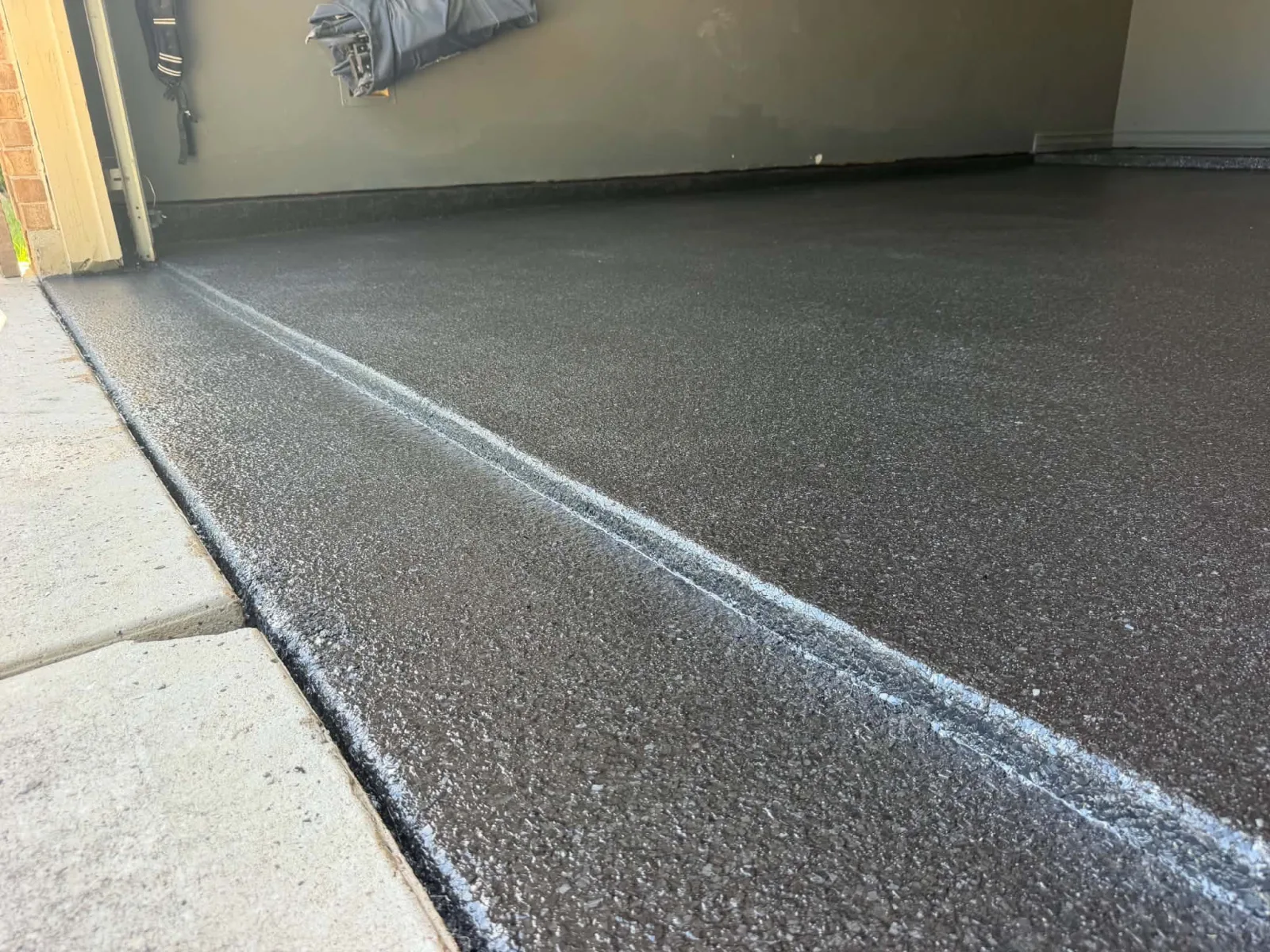
Details around walls, doors, curbs, and transitions take time. Some proposals cover only the horizontal floor, while others include vertical edges or a finished entrance. The difference may be easy to miss until the project is complete.
8. Access, occupied spaces, and scheduling
The garage usually needs to be cleared before preparation begins. Limited access, stored items, active work areas, or a schedule that requires several separate phases may add labor. Temperature, humidity, ventilation, and the product’s recoat windows can also affect how the work is scheduled.
What a useful estimate should include
- The measured area and every surface included in the price.
- The concrete preparation method.
- The repairs and joint treatment included in the scope.
- Each coating layer and finish type.
- Details for walls, steps, curbs, and the garage entrance.
- The expected schedule for walking and vehicle use.
- Conditions that could change the price after preparation begins.
Can a contractor give a final price from photos?
Photos are useful for discussing size, layout, and the desired finish. They do not show every contaminant, moisture condition, weak area, crack, or joint. A final scope should account for the actual slab and the selected system.
Why are two estimates sometimes far apart?
The proposals may not include the same work. One may specify mechanical preparation, crack repair, full flake coverage, vertical edges, and a topcoat. Another may describe only a general coating. Compare the preparation, repairs, layers, details, and schedule before comparing the total.
The bottom line
The best estimate is not automatically the highest or lowest. It is the one that clearly explains what will happen to your concrete and what finished system you are buying. That gives you a fair way to compare contractors and reduces surprises after the project starts.
This article provides general information. The condition of a specific slab and the selected manufacturer’s current technical data should guide an actual project.
Want a written scope for your garage?
Contact Carnar Epoxy to discuss your concrete, finish options, and project schedule.
Request a free estimate