When can you walk or park on a coated garage floor?
A floor can feel dry before it is ready for a vehicle. Foot traffic, light traffic, normal traffic, and full cure are separate stages, and the timing depends on the exact coating system and site conditions.
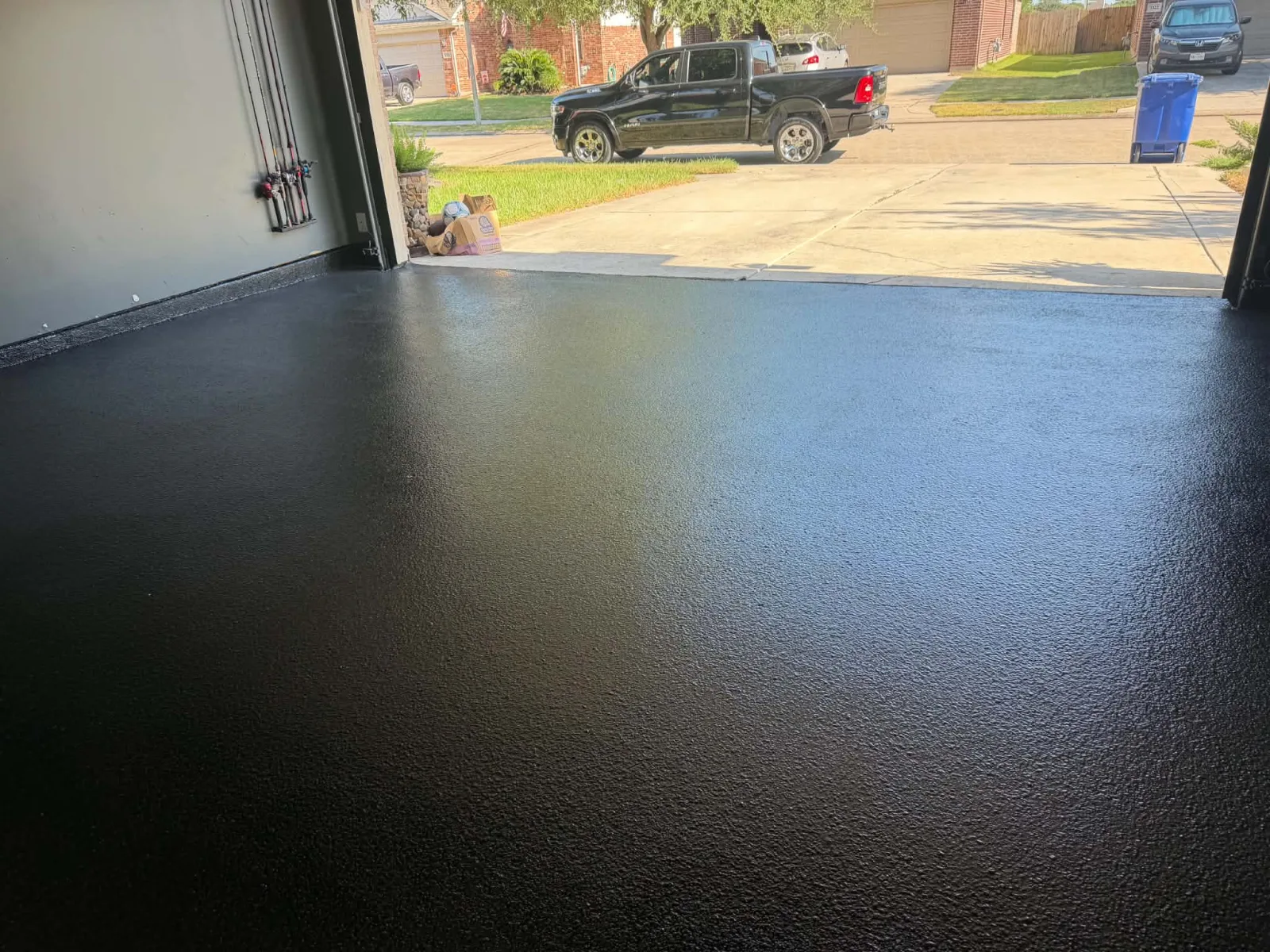
One of the most important questions after a garage floor project is also one of the easiest to oversimplify: when can the garage be used again? The safe answer is not a universal number. It comes from the installed products, number of layers, temperatures, humidity, and the manufacturer’s current instructions.
The short version: do not use “dry to the touch” as permission to park. Ask for separate times for walking, moving items back in, vehicle traffic, water exposure, and full cure.
Dry, cured, and ready for traffic are not the same
A coating passes through several stages after application. The terms used in technical data can vary, but the basic differences are important:
- Dry to the touch: the surface no longer feels wet, but it may still mark or deform.
- Foot traffic: the product can accept limited walking under the stated conditions.
- Light or normal traffic: the manufacturer allows a higher level of use, as defined for that product.
- Vehicle traffic: the product or installer specifically permits parking or driving on the floor.
- Full cure: the coating has reached the cure stage listed in its technical data.
These stages should not be treated as interchangeable. A shoe applies far less sustained load than a warm vehicle tire.
Simiron products publish different schedules
Carnar Epoxy uses Simiron coating products. The exact primer, base coat, broadcast, and topcoat can vary by project, so the return-to-service schedule must match the products listed in the project scope.
Simiron’s current 1100SL product data lists separate schedules for its Standard and Slow cure versions at 72°F and 50% relative humidity. The Standard version lists light foot traffic after 10 hours, heavy traffic after 48 hours, and full cure after five days. The Slow version lists light foot traffic after 24 hours, heavy traffic after four days, and full cure after seven days.
Simiron Polyaspartic HS also comes in several cure speeds. At 72°F, its current product data lists foot traffic after 17 to 20 hours for Slow cure and after four to six hours for Fast cure. Both list heavy traffic after 24 hours under the stated conditions. These figures describe individual products, not automatic permission to park on every completed floor system.
| Published example | Early use | Later use | Full cure |
|---|---|---|---|
| Simiron 1100SL Standard | Light foot traffic in 10 hours | Heavy traffic in 48 hours | 5 days |
| Simiron 1100SL Slow | Light foot traffic in 24 hours | Heavy traffic in 4 days | 7 days |
| Simiron Polyaspartic HS Slow | Foot traffic in 17 to 20 hours | Heavy traffic in 24 hours | Follow the complete system instructions |
| Simiron Polyaspartic HS Fast | Foot traffic in 4 to 6 hours | Heavy traffic in 24 hours | Follow the complete system instructions |
These are Simiron’s published product examples at 72°F. Heavy-traffic times are not automatic permission for vehicle use in every assembled system. Carnar Epoxy’s written project instructions control.
Temperature changes the reaction
Many resinous coatings cure through a chemical reaction. Product and slab temperature affect that reaction, the working time, the recoat window, and the time before use. Cooler conditions commonly slow cure. High temperatures may shorten working time and require careful planning.
The temperature of the concrete matters, not only the number shown on a weather app. A garage slab can be cooler than the outdoor air, especially after a cool night or when air conditioning reaches the space.
Humidity and condensation matter in Houston
Houston humidity does not create one predictable cure time. Relative humidity, ventilation, and the relationship between slab temperature and dew point can affect installation. Simiron states that higher temperatures and humidity shorten working time for these products, while lower conditions can extend published traffic times.
Fresh coatings may also need protection from water, dampness, or condensation for a stated period. Opening the garage door is not always the answer if outside air introduces more humidity or contaminants.
More layers create a complete project schedule
A flake floor may involve a primer or base coat, broadcast flake, scraping or cleanup, and a protective topcoat. Each layer has a minimum and maximum recoat window. The final return-to-service time begins with the completed system, not necessarily the first morning of work.
Extra film thickness, repairs, or material placed in joints and damaged areas may also need time before later steps continue.
Vehicle tires create a different load
A parked vehicle creates concentrated pressure at four tire contact areas. Tires can also be warm after driving. Parking too early can leave marks or disturb a coating that feels firm under foot but has not reached the specified vehicle-use stage.
Turning the steering wheel while the vehicle is stationary adds more stress. When the garage returns to service, drive in and out smoothly and avoid unnecessary tire scrubbing during the early period recommended by the installer.
What to keep off the floor while it cures
- Vehicles, motorcycles, trailers, and heavy rolling equipment until approved.
- Water, rain, washing, and wet items during the protected cure period.
- Rubber mats, cardboard, plastic sheets, and other coverings that may trap moisture.
- Boxes, cabinets, and sharp feet that concentrate weight in a small area.
- Dust, leaves, insects, and jobsite debris while the surface is still vulnerable.
Questions to ask before the project starts
- Which exact products and layers are being installed?
- When can people walk on the floor?
- When can light storage items return?
- When can a vehicle be parked?
- When can the floor get wet or be cleaned?
- What temperature or humidity conditions could change the schedule?
Does Houston heat always make the floor ready sooner?
No. Warmer conditions can speed the cure of some products, but they can also shorten working and recoat times. Humidity, condensation, slab temperature, ventilation, coating thickness, and the complete system still matter. Follow the project-specific schedule instead of assuming that a hot day makes the floor safe for a car.
The bottom line
Use the schedule for the exact system installed in your garage. If the floor feels dry earlier, that does not override the product data. Waiting through the stated foot-traffic and vehicle-traffic periods protects the work when it is most vulnerable.
This article provides general information. Always follow the installer’s written return-to-service instructions and the current technical data for the products used on your project.
Planning your garage schedule?
Contact Carnar Epoxy to discuss the slab, coating system, finish, and expected return to service.
Request a free estimate